
Separation as World Loss
Rehabilitating Perception - Emotion, Context, and the Living World

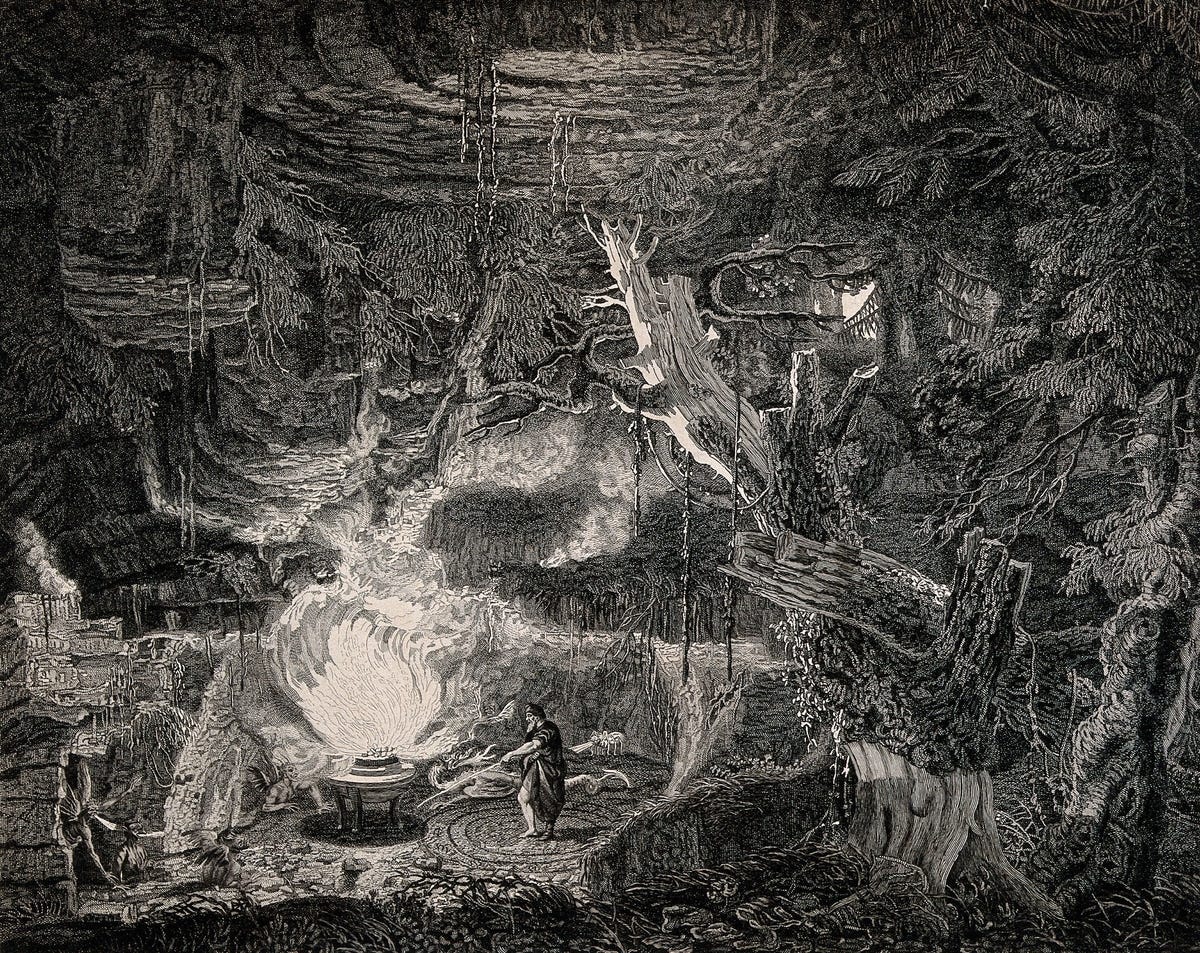
What must we erase in order to believe that an emotion arises solely within us?
What have we mutilated, exiled, rendered invisible, and silenced so that it becomes a cognitive habit—this automatic reorganization of everything into an internal psychological narrative?
Almost everything has been erased… from the light streaming through the room, the noise of the screens, the accumulated fatigue, the economic urgency, the architecture that constricts the chest, the lack of food. But also the news trembling in the body, the temperature, the smell, the time of day, and the season, the family history, the slow violence of institutions, the forgotten territory. Obliterated.
For an emotion to seem strictly “mine,” much had to disappear from the field of perception. Modernity has taught us to seek the origin of feeling in an internal hall of mirrors, where each emotion returns a fragmented image of the self, my history, my wound, my personality, and my individual responsibility. Inescapable as a prison we cannot see, so captive are we. And we continue to rummage within this interior of reflections and fragments, a wholeness that exists only in relation. With nerves exposed to the world’s pains, yet lacking the references to name them as such.
These involuntary reflections of reorganizing experience into an internal psychological narrative are not merely a cognitive habit, for they also inhabit the body—a profound training in separation. Even when the world touches the body from all sides, we learn to tell the story as if everything began and ended within us. The real context becomes an indistinct background or is quickly absorbed into a personal symbol… in the forest as the unconscious, in the wind that becomes the state of the soul, in the fatigue that turns into a failure of emotional management, or in the sadness converted into an individual theme. We sacrifice entire ecologies, sucking them in as inner layers of the self, silencing them again and again. The modern psyche looks so deeply inward because it has lost the world. And the more it loses the world, the more compulsively and obsessively it observes itself.
The modern psyche not only interprets the world from within itself, but captures the world within itself, until the relationship disappears and only interiority remains. Isolated, empty, without grounding. We have ceased to know how to “be-and-feel-with.”
I do not believe the path lies in analyzing ever more deeply, but in relearning how to perceive. To shift our posture and rehabilitate our monolithic perception, in a sort of eco-relational physical therapy. We can ask again: what air was there? what ground supported the body? what rhythms ran through us? what systems were present? what beings, human and non-human, made up that emotion? Not to deny interiority, but to return it and weave it back into the world, so that it feels part of it again, not as the center, but as a knot in the web.
Because separation, besides being wrong and impossible in an interconnected world, is a violent loss of the world. It is the learned inability to feel that the body and mind were never alone, that every emotion has an atmosphere, kinship, history, matter, and place. Every emotion is a relational event.
Most important in all this is that when only interiority is recognized as the sole truth, we lose not only psychological context but also ecological literacy—modernity has created a psyche that is simultaneously hyper-reflective and ecologically illiterate. A psyche that can name emotional micro-states but has lost the ability to read wind, humidity, seasons, silence, kinship, or to assume a territorial presence. Often, the modern subject no longer knows how to inhabit, only to interpret itself to the point of exhaustion, like a caged and endangered animal. The body no longer knows how to read the signs of the world that pass through it—the dryness, the unseasonable heat, the silence of the birds, the diffuse anxiety in the face of the news, the sadness at the sight of a felled tree, the anger at pollution, the mourning for an altered landscape. All of this is quickly recoded as “my problem,” “my sensitivity,” “my anxiety,” “my excess.”
The ecological emotions that could reconnect us to the territory, to the damage, and to collective responsibility become invisible, pathologized, or privatized. Out of ignorance of our imprisonment, we maintain the algorithm of separation.
The perceptual mutilation of modernity produces this double violence: the separation from the world that feels with us, and the obstacle to recognizing that the ecological polycrisis is not just “out there”—in reports, in fires, or in floods—but already pulses in the nervous system as a sign of wounded belonging.
But the living world is still right here—can you feel it?
References:
Ahenakew, Cash, Sharon Stein, Vanessa Andreotti, Ninawa Inu Huni Kui, Lisa Taylor, Stacey Prince, Jaya Ramesh, Chelsea Williams, Rene Suša, Rose Vukovic, and Claudia Diaz-Diaz. “Decolonizing Mental Health in the Polycrisis: Pathways Toward Neuro-Decolonization.” American Psychologist 80, no. 8 (2025): 1297–1312. https://doi.org/10.1037/amp0001540.
Bednarek, Steffi, ed. Climate, Psychology, and Change: Reimagining Psychotherapy in an Era of Global Disruption and Climate Anxiety. Berkeley: North Atlantic Books, 2024.
Blume, Arthur W. A New Psychology Based on Community, Equality, and Care of the Earth: An Indigenous American Perspective. Santa Barbara, CA: Praeger, 2020.
Comas-Díaz, Lillian, Hector Y. Adames, and Nayeli Y. Chavez-Dueñas, eds. Decolonial Psychology: Toward Anticolonial Theories, Research, Training, and Practice. Washington, DC: American Psychological Association, 2024. https://doi.org/10.1037/0000376-000.
Kahn, Peter H., Jr., and Patricia H. Hasbach, eds. Ecopsychology: Science, Totems, and the Technological Species. Cambridge, MA: MIT Press, 2012.
Machado de Oliveira, Vanessa. Outgrowing Modernity: Navigating Complexity, Complicity, and Collapse with Accountability and Compassion. Berkeley: North Atlantic Books, 2026.
Whyte, Kyle Powys. “Indigenous Climate Change Studies: Indigenizing Futures, Decolonizing the Anthropocene.” English Language Notes 55, nos. 1–2 (2017): 153–162.
Four Arrows (Wahinkpe Topa) and Darcia Narvaez. Restoring the Kinship Worldview: Indigenous Voices Introduce 28 Precepts for Rebalancing Life on Planet Earth. Berkeley: North Atlantic Books, 2022.
Anderson, Judith, Tree Staunton, Jenny O’Gorman, and Caroline Hickman, eds. Being a Therapist in a Time of Climate Breakdown. Abingdon: Routledge, 2024.
Bhatia, Sunil, Jesica Siham Fernández, and Christopher C. Sonn, eds. Decolonial Psychology: Academic and Activist Perspectives. Abingdon: Routledge, 2026. https://doi.org/10.4324/9781003492214.
Thank you for putting words to this concept. I have been feeling and struggling with it but unable to express it to others. I feel we have a long way to go before we actually recognize and practice the new perception